

Crystal Bracelet on Left Hand vs. Right Hand: How to Choose Your Wrist
Crystal Bracelet on Left Hand vs. Right Hand: How to Choose Your Wrist
Which wrist should you wear a crystal bracelet on? The answer depends on your personal goals and the traditions you follow: some guidance associates the left hand with receiving, while the right-hand meaning isn't as clearly defined.
These ideas are spiritual traditions, not proven scientific effects, so choose the wrist that feels comfortable and meaningful to you. Explore the crystal bracelet wearing tips to compare the common guidance.
Crystal Bracelet on Left Hand vs Right Hand: What's the Difference?
A common spiritual interpretation links the left side with receiving energy and the right side with sharing or expressing it. These meanings vary across traditions and individuals, so treat them as personal symbolism rather than universal rules or scientifically proven effects.
Some wearers choose the left wrist when they want to focus on reflection, calm, or a personal intention. In this view, the left side is associated with receiving, so a bracelet can act as a reminder to pause and check in with yourself.
For example, you might wear it during meditation or as a cue to return to a daily goal. Pairing the bracelet with a simple daily crystal routine can help make that intention part of your day. The meaning comes from your practice, not a guaranteed effect of the stone.
Why the right hand is often linked with action
Other wearers prefer the right wrist to symbolize confidence, communication, or putting an intention into practice. If you want a bracelet to remind you to speak up in a meeting or follow through on a goal, the right hand may feel like a fitting choice.
Beliefs about which wrist receives or expresses energy differ by culture and personal practice. Neither wrist has a proven spiritual advantage, and current evidence does not establish crystal healing effects, as EBSCO's overview of crystal healing explains. Choose the side that feels comfortable and meaningful to you.
There's no single correct wrist for a crystal bracelet. Choose the side that fits your personal meaning and feels comfortable in your daily routine.
Match the wrist to your personal intention
Decide what you want the bracelet to remind you of. If you associate your left wrist with receiving, you might wear it there as a cue to pause or make space for self-reflection. If the right wrist feels connected to action, wear it there to remind yourself to speak up or follow through.
These associations are personal, not fixed rules. You can also wear crystals with intention by choosing a simple reminder that feels relevant to your day. The meaning you give the bracelet matters more than which side you choose.
Consider comfort, handedness, and daily activities
Your routine may make the choice easier. If a bracelet catches on your desk while you write, presses against a tool, or gets in the way during exercise, try it on your less active wrist. Right-handed people often find the left wrist more comfortable for everyday tasks, while left-handed people may prefer the right.

Wear it where it feels secure and doesn't distract you. If your activities change, switch wrists; your bracelet can still serve as a reminder either way.
Can You Switch Wrists or Wear Crystal Bracelets on Both Hands?
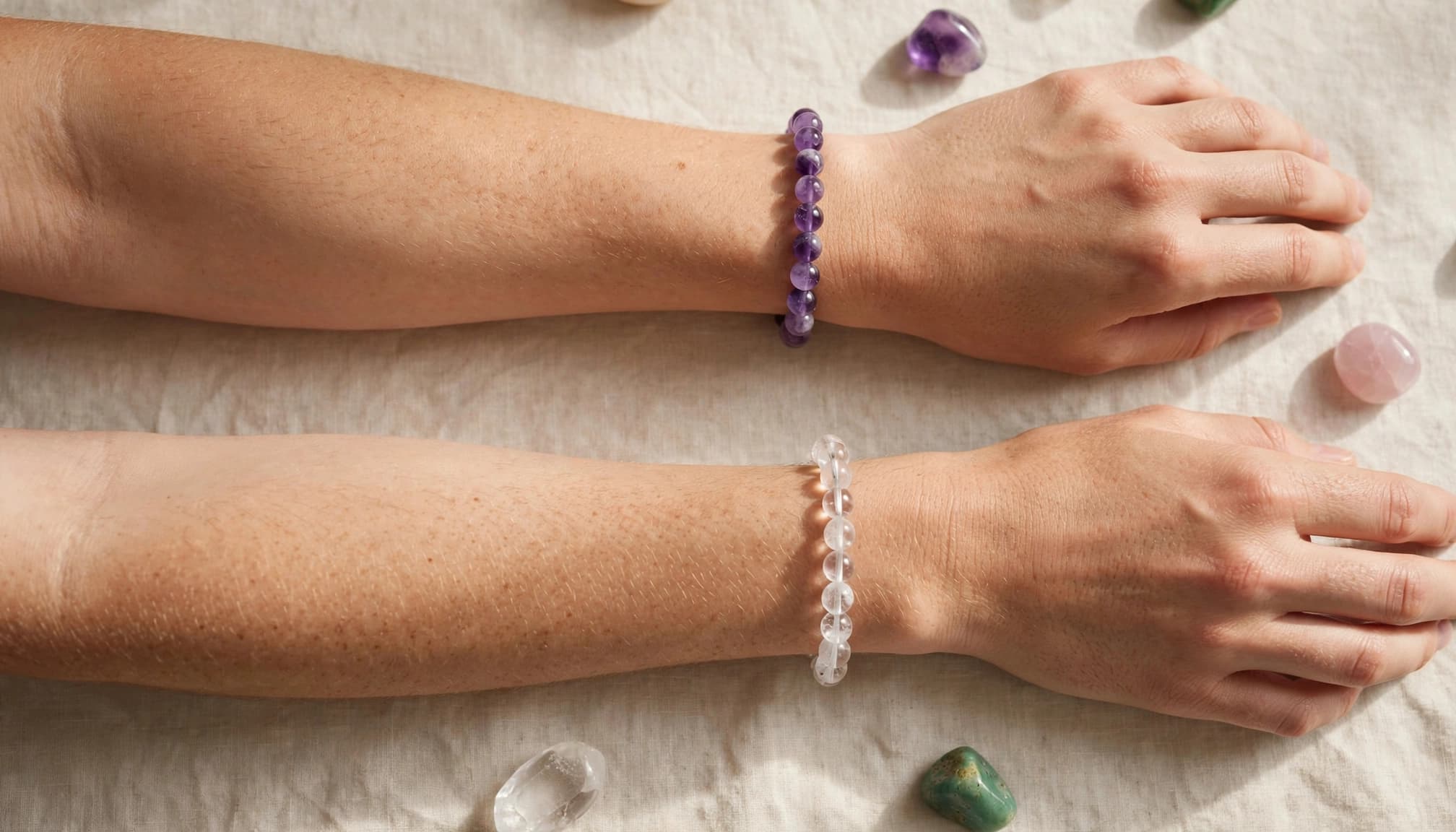
Yes. You can switch wrists or wear crystal bracelets on both hands, based on what feels comfortable and meaningful to you. Spiritual interpretations of left- and right-hand symbolism vary, so you don't need to worry that changing wrists is a mistake.
Simple ways to test what feels right
Try wearing the bracelet on one wrist for a few days, then move it to the other. Notice whether it feels comfortable during your usual activities and whether either side carries a personal meaning for you. If you like wearing more than one bracelet, you can also try one on each wrist.
Pay attention to how the bracelet fits into your routine, rather than treating a change in mood as proof that the crystal caused it. A recent study on crystal healing and anxiety found no anxiety-relieving effect beyond placebo. Choose the arrangement that suits you, and change it whenever you like.
Conclusion
The left wrist is often associated with receiving, while the right is linked with action or expression. These are personal spiritual interpretations, not universal rules or proven effects.
Choose the wrist that feels comfortable and gives your bracelet meaning in your routine. It can support a personal practice, but it shouldn't replace medical care.